Granulator for Bentonite and NPK Granulation Plant: Advanced Fertilizer Production Solutions

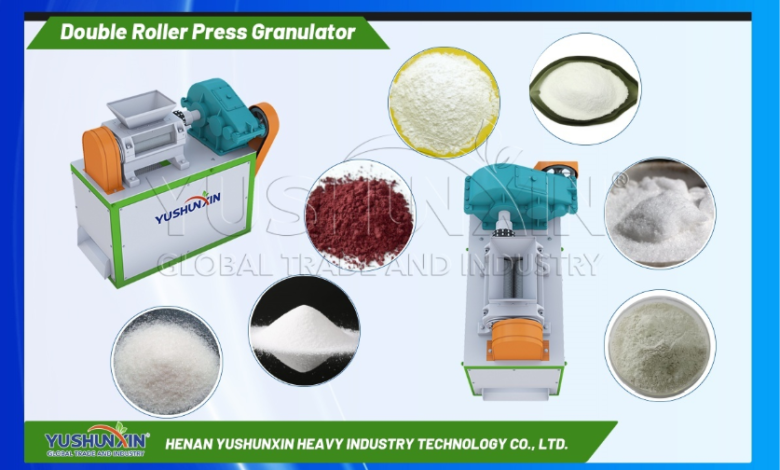
Fertilizers are essential for modern agriculture, providing crops with the nutrients they need to thrive. To meet growing global demand, manufacturers rely on advanced production equipment, such as a granulator for bentonite and a 10 t/h NPK granulation plant. These systems improve efficiency, ensure high-quality granules, and allow the production of customized fertilizers for different soil and crop requirements.
This article explores the features, advantages, and applications of these essential fertilizer manufacturing machines.
Granulator for Bentonite: Enhancing Fertilizer Quality
What Is a Granulator for Bentonite?
A granulator for bentonite is a machine designed to convert bentonite powder into uniform granules. Bentonite is a natural clay that acts as a binder, improving the strength and durability of fertilizer pellets. It enhances nutrient retention and ensures that granules maintain their shape during transport and storage.
Key Features
- Uniform Granule Size
Produces consistent, durable granules that resist breaking and caking. - High Efficiency
Continuous operation reduces production time and labor costs. - Compatibility with NPK Production
Can be integrated into NPK fertilizer lines, ensuring smooth production of compound fertilizers. - Eco-Friendly Operation
Reduces dust and waste, minimizing environmental impact. - Customizable Output
Granule size and density can be adjusted according to market demand.
Using a granulator for bentonite ensures stable, high-quality fertilizer granules that improve both production efficiency and final product performance.
See also: How Businesses Can Refresh Their Look on a Budget
NPK Granulation Plant: Producing Balanced Fertilizers
What Is an NPK Granulation Plant?
An granulator for bentonite is an integrated system that manufactures compound fertilizers containing nitrogen (N), phosphorus (P), and potassium (K). These nutrients are critical for plant growth, and balanced NPK fertilizers provide the essential support crops need for healthy development.
Key Features
- Complete Production Line
Includes crushers, mixers, granulators, dryers, coolers, and packaging machines, providing a turnkey solution from raw materials to finished granules. - Adjustable Formulations
Producers can customize NPK ratios to suit specific crops, soil types, and regional agricultural needs. - High Production Efficiency
Continuous operation increases output while reducing labor requirements. - Uniform Granule Quality
Produces consistent size and shape, ensuring easy handling, storage, and application. - Sustainable and Environmentally Friendly
Modern systems recycle dust and waste while minimizing emissions.
A 10 t/h NPK granulation plant provides efficient, high-capacity production of high-quality compound fertilizers, helping manufacturers meet growing agricultural demands.
Advantages of Using Granulators and NPK Plants Together
- Enhanced Fertilizer Quality
Bentonite granulation improves pellet durability, while NPK granulation ensures balanced nutrient distribution. - Increased Production Efficiency
Continuous operation and automation reduce labor costs and streamline manufacturing. - Cost-Effective Manufacturing
Efficient granulation reduces raw material waste and energy consumption. - Customizable Fertilizers
Enables precise NPK ratios and granule sizes for specific crop requirements. - Sustainability
Reduces environmental impact by minimizing dust, recycling waste, and optimizing energy use.
By combining a granulator for bentonite with an NPK granulation plant, manufacturers can produce high-quality, uniform, and market-ready fertilizers efficiently and sustainably.
Applications
- Crop Fertilization: Suitable for cereals, vegetables, fruits, and cash crops.
- Soil Amendment: Bentonite improves soil structure, water retention, and nutrient availability.
- Custom Fertilizer Production: Allows adaptation of NPK ratios and granule sizes to meet regional agricultural requirements.
- Export Fertilizers: High-quality, uniform granules meet international standards for global markets.
- Industrial Fertilizer Production: Scalable for small, medium, and large fertilizer plants.
These machines help manufacturers deliver fertilizers that meet both market demands and quality standards, ensuring long-term profitability and growth.
Choosing the Right Equipment
When selecting a granulator for bentonite or an NPK granulation plant, consider the following:
- Production Capacity
Ensure equipment matches current and projected demand. - Automation Level
Higher automation reduces labor costs and improves operational efficiency. - Customizability
Machines should allow adjustment of granule size, density, and NPK ratios. - Maintenance and Support
Reliable suppliers provide installation, maintenance, spare parts, and operator training. - Energy Efficiency
Equipment designed for minimal energy consumption reduces long-term operational costs.
Proper selection ensures reliable, efficient, and profitable fertilizer production.
Conclusion
A granulator for bentonite and a NPK granulation plant are essential components of modern fertilizer production. Bentonite granulators improve pellet durability, while NPK plants produce balanced compound fertilizers suitable for a wide range of crops.
By investing in these machines, manufacturers can increase production efficiency, reduce waste, ensure product consistency, and meet growing agricultural demands. These technologies are crucial for sustainable, high-quality, and profitable fertilizer production, helping businesses thrive in the competitive agricultural market.